
Tales of Eternia Remastered Gameplay: How It Plays
How Tales of Eternia Remastered plays: 2D A-LMBS battles, semi-auto vs manual control, quality-of-life toggles, boosts, camping and skits.
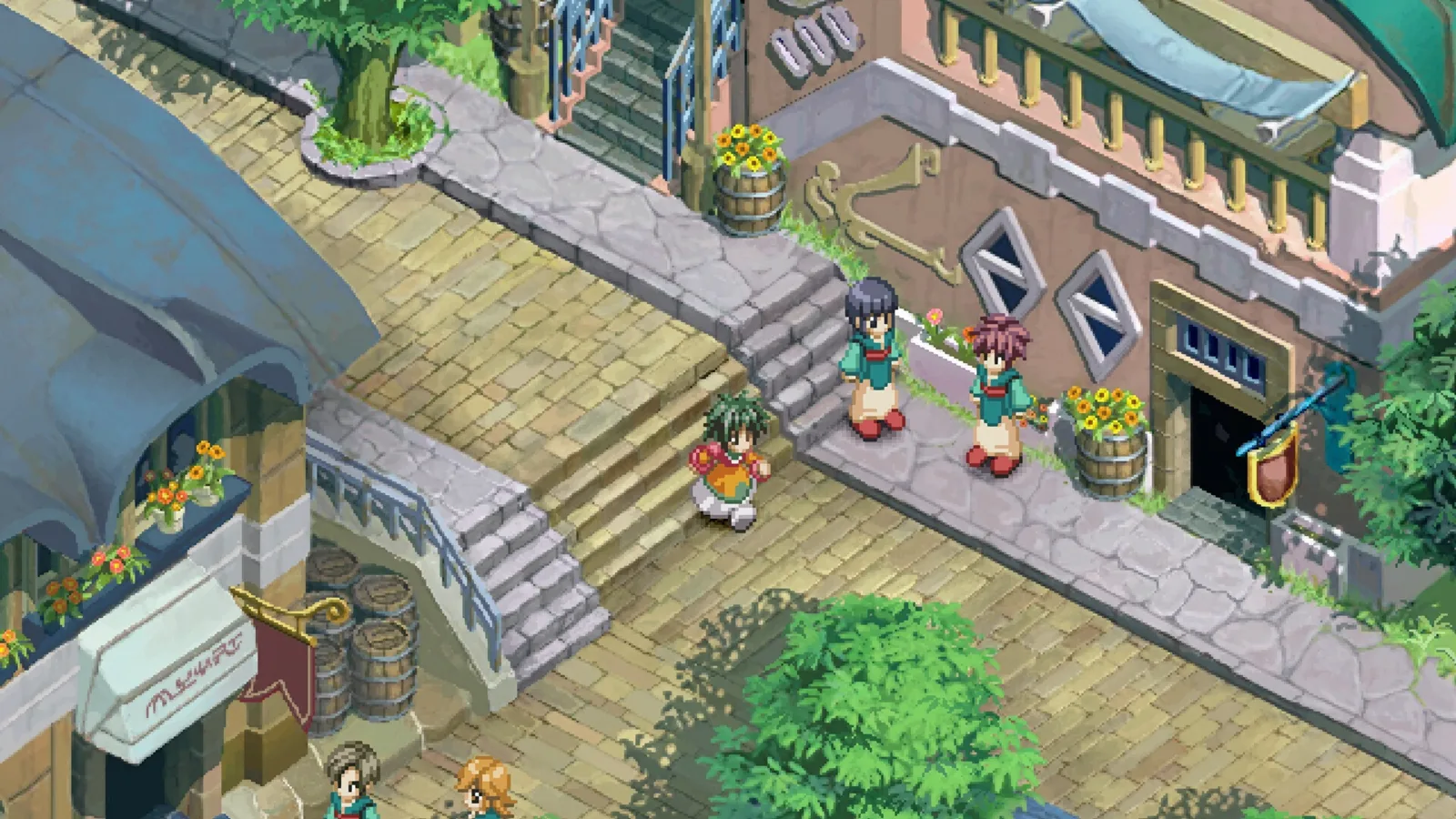
Table of Contents
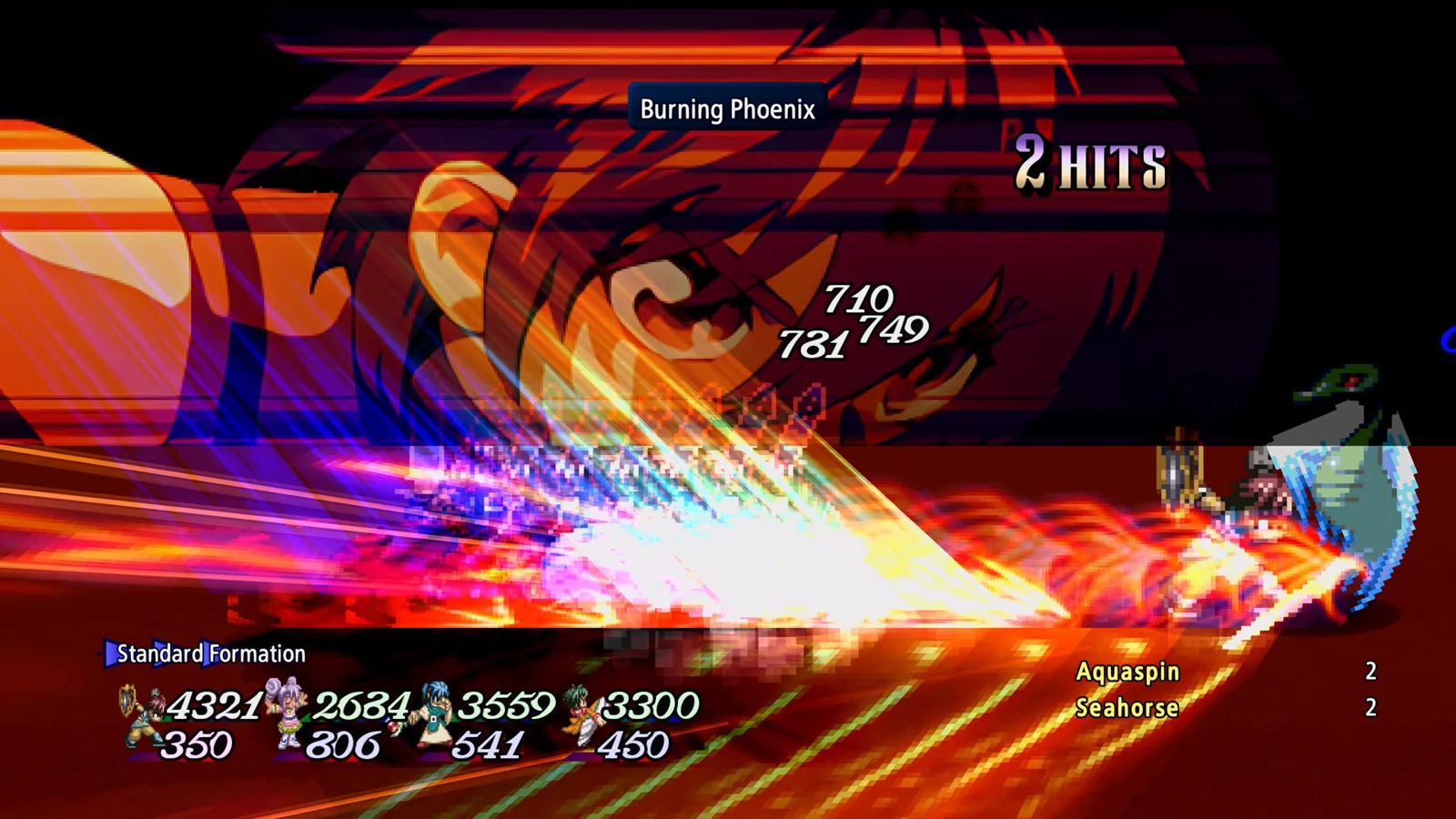
Tales of Eternia Remastered is a 2D, side-on action RPG. You control one party member in real time along a single battle line while the rest of the party fights under AI, and most of the modern conveniences are optional toggles you can flip rather than permanent changes to the game. The official Bandai Namco site describes combat as the "Aggressive Linear Motion Battle System" (A-LMBS) with fast-paced 2D battles, arte usage, continued combos and coordination between party members, and lists quality-of-life additions including destination markers, the ability to disable enemy encounters, and a high-speed mode during auto-battle. The game launches worldwide on October 16, 2026.
How a battle actually plays
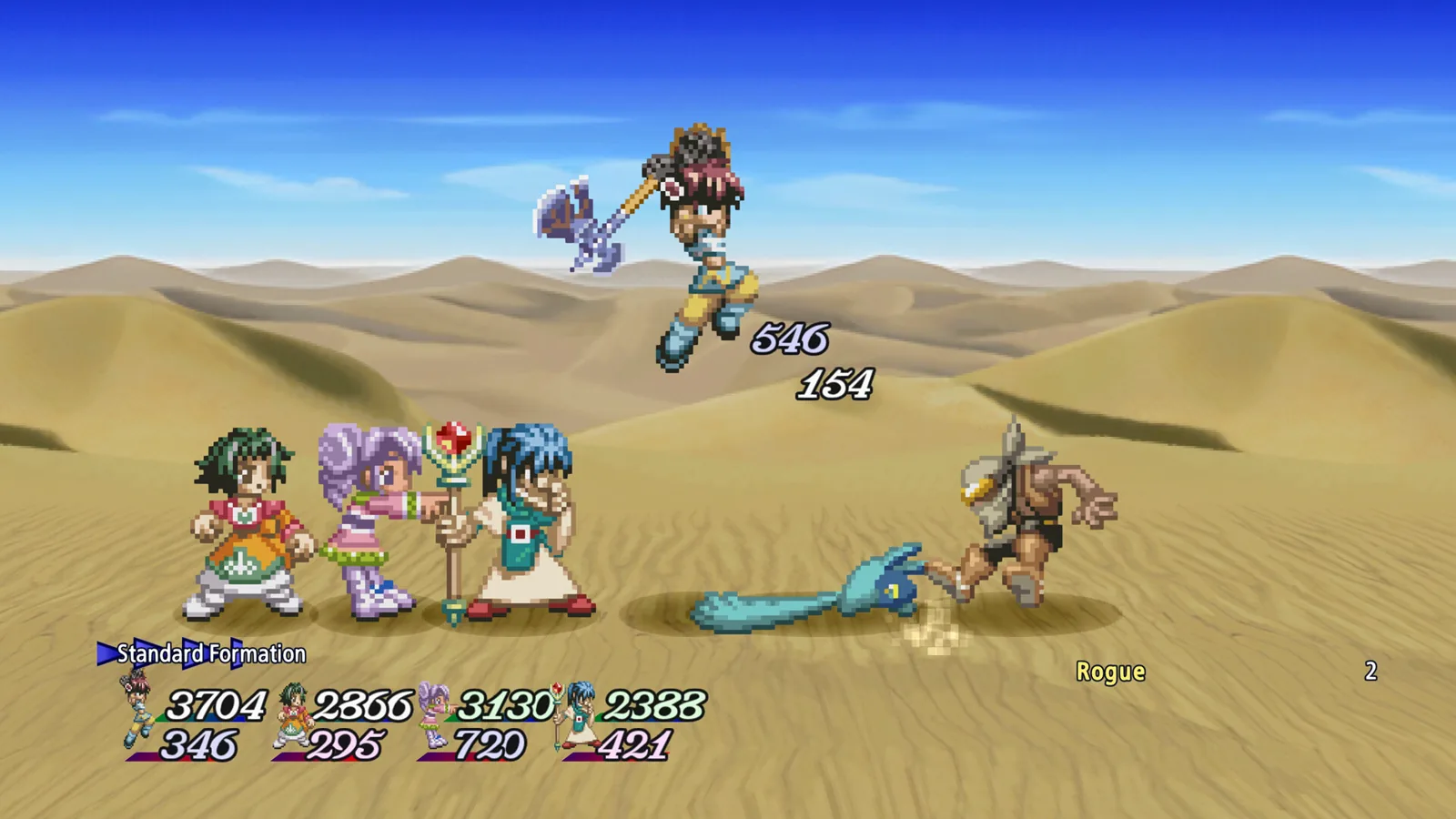
The clearest picture of the moment-to-moment feel comes from a long review by the GVG channel on YouTube. In their account, pressing the attack button gives you a basic three-hit combo, and direction inputs let you swipe upward, jump and slash, or step forward. Once you learn skills you can assign them to a direction plus the skill button, spending TP for stronger attacks. Positioning is the core skill: you want to line yourself up to catch several enemies, or guard while waiting for an opening.
The same reviewer found the inputs stricter than in modern Tales games — chaining a basic combo into an arte takes practice, and upward inputs are the fussiest to land at first. They also describe a boss that fires a beam straight across the battlefield from wherever she is facing, with guarding used to stop the beam from hitting the allies behind you.
One caution: those control notes come from a console player's review and describe pad-style inputs. The exact button mapping on the Steam release is worth checking in-game rather than assuming it matches the console layout.
Semi-auto, manual and party AI
By default the game puts you in a semi-auto state: if you attack while away from an enemy, your character runs in, strikes, then retreats, and guarding happens automatically. The reviewer says you can unlock the manual option early in the game by talking to an NPC at a dojo close to the starting town, and they preferred it. In manual, double-tapping a direction dashes — handy for getting behind enemies — and you guard whenever you choose.
Allies are AI-controlled, with adjustable behaviour settings. Even when told to attack more often, the reviewer saw them occasionally standing around, so expect to babysit them with healing items at times.
Skills lean on slash or thrust
According to the same review, Reid and Farah learn skills based on stats unique to them, and the protagonist's attack is split into slash and thrust values much like the earlier Tales titles. Skills lean one way or the other — Swarm toward thrust, Demon Hammer toward slash — so your weapon and your skill loadout need to agree. Reid can equip swords, axes, knives and halberds, each tending to excel at one stat; a plain sword is the reviewer's suggestion for a balanced build. They also note you find so much equipment in chests that buying Reid a weapon is often unnecessary.

The toggles that change how you play
Several of the remaster's conveniences can be switched on or off at will:
- Destination markers point you toward objectives, including easily missed side quests. The reviewer found them most intrusive in dungeons and turned them off for immersion.
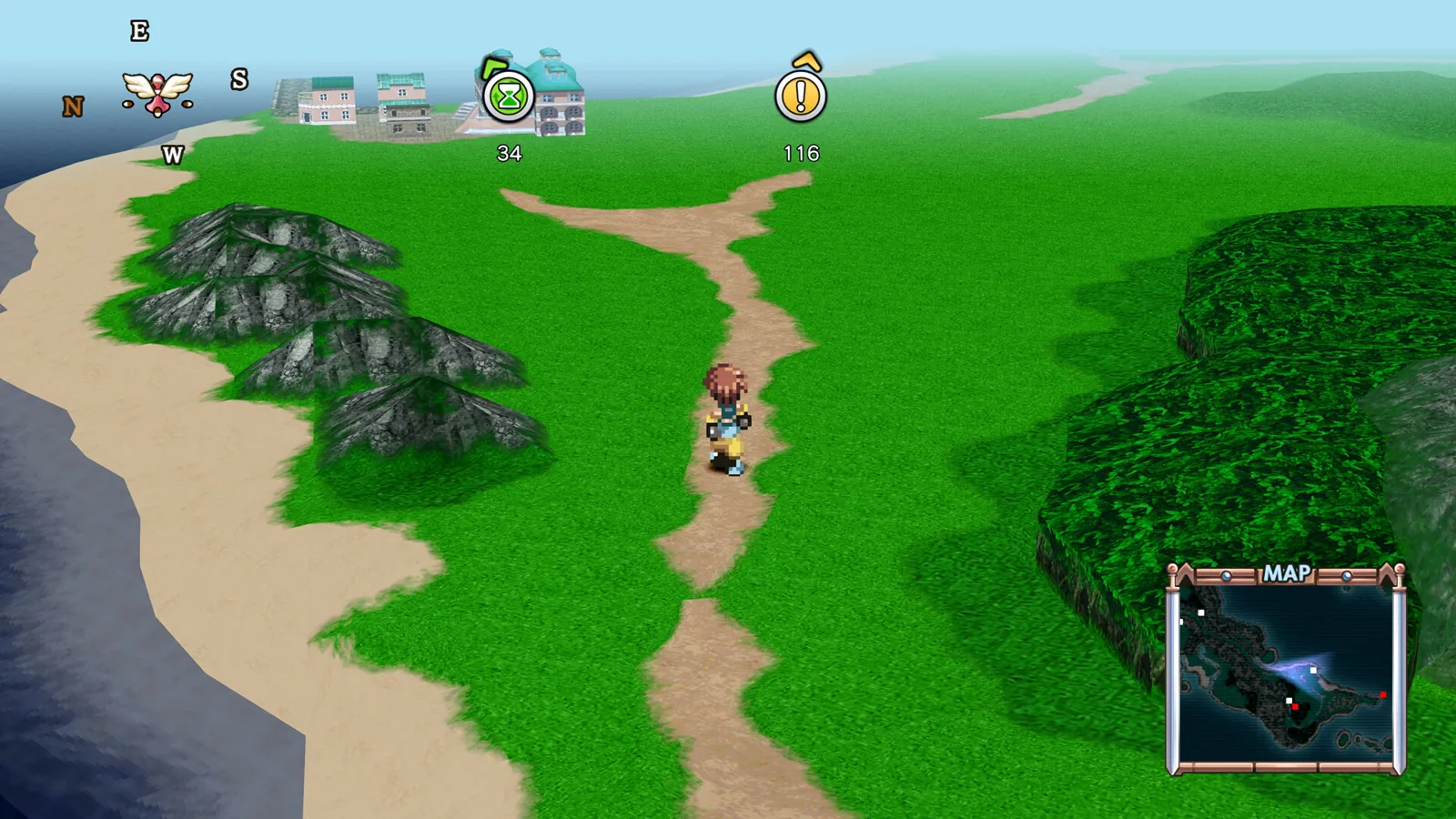
- Encounter toggle lets you disable random encounters when you just want to travel.
- High-speed auto-battle speeds fights up so you get back to the field faster. It sets battle to auto for the whole party, which is worth remembering before using it against stronger enemies.
- Graphics and SFX modes let you switch between the remastered presentation and the original look, so you can compare or just play the version you prefer.
You can also save anywhere, with a new autosave on top. Green crystals serve as your reload point if you fall in battle or quit inside a dungeon.
Boosts replace the grade shop
The reviewer describes the new boost function as effectively the grade shop under a new name. It lets you multiply or reduce experience and money gain, the damage you take, how fast you gain attack and cooking proficiency, and encounter rates. Boosts can be toggled at any time, so you can dial difficulty up or down mid-playthrough, or leave everything untouched for a pure run. For a closer look at what each option does, see our grade shop and boosts page.
Camping, skits and what camping does not do
Camping is a menu option on the world map, and it needs no item. There is no on-screen prompt telling you a skit is waiting, so the reviewer's advice is to camp often — and repeatedly — if you want to catch them all. Many skits were never implemented outside Japan in the original PlayStation release, and in this version they are translated and fully voiced.
Be careful with what camping actually restores. In the reviewer's experience it heals HP but not TP, and it does not revive KO'd characters, despite the name suggesting a full rest.
What this version does not include
Local multiplayer is absent here according to the GVG review, even though the PlayStation original had it and the game otherwise keeps a lot of mini-games. As of 2026-10-15, the official Bandai Namco site lists Tales of Eternia Remastered as single-player only. The reviewer notes this remaster is largely based on the PlayStation Portable port, which also lacked multiplayer — which is why they call it a rare single-player Tales game.
On presentation, the reviewer's view is that sprites are the big win: characters stay crisp at any camera zoom, where the PSP version blurred them. Environments are more mixed, with some textures and backgrounds blended rather than redrawn, and they ended up playing in the original graphic style. They also mention that a 2.0 update for the Japanese release adds a choice of remastered or original fonts, and that their own copy did not have that option during their review period; they expect it may reach English releases later, though that is their speculation rather than a confirmed plan.
Platforms and version notes
As of 2026-10-15, the official Bandai Namco site lists PlayStation 4, PlayStation 5, Xbox Series X|S, Steam, Nintendo Switch and Nintendo Switch 2 for a worldwide launch on October 16, 2026. The Steam page is the place to check system requirements and store details. The player accounts above do not state a build number, so treat specific balance observations — arte timing, AI behaviour, how much equipment you find — as impressions from the launch-window version rather than fixed values.
If you want to see the systems in motion before buying, the GVG review ("Tales of Eternia Remastered REVIEW - We've Been Waiting for This") covers combat, boosts and visuals in detail, and a separate PS5 gameplay video shows field exploration, skits and battle artes without commentary.
Next steps
Related Articles
Continue Reading
4x EXP Boost: How It Works
Tales of Eternia Remastered 4x exp explained: how to toggle the boost, what 1x, 2x and 4x really do, the 5x damage trap, and where the menu options sit.
5x Damage: How the Boost Works
Tales of Eternia Remastered 5x damage explained: the full boost table from 1x to 5x, why incoming hits hurt too, and how battle retry softens boss fights.
Achievements: What We Know
No achievement or trophy list is public as of 2026-10-15. Here's what the remaster's platforms, modes and completion-relevant features tell us to expect.
Auto Battle: Speed and Boosts
Tales of Eternia Remastered auto battle explained: how to turn on Auto, the high-speed toggle, and the EXP and Gald boost numbers you can set in the menu.
Dub: What We Know
Bandai Namco's remaster is reported to ship a new English dub alongside Japanese voices. What's known about the audio tracks, subtitles and release date.
English Dub: Cast and Skits
Tales of Eternia Remastered English Dub explained: the new cast, dual audio, voiced skits, and whether the 2001 PS1 voices return in the 2026 remaster.