
Tales of Eternia Remastered Combat Guide: A-LMBS Basics
Tales of Eternia Remastered combat guide: control modes, Arte chains, Craymel Cages, summons, and the remaster QoL toggles, with exact tables and steps.
Table of Contents
Combat in Tales of Eternia Remastered is a cancel chain: two or three normal strikes, a Base Arte on the last recovery frame, then an Arcane Arte to bury the gap. This Tales of Eternia Remastered combat guide covers that chain order, the Book of Manual unlock, the Craymel Cage rules sitting behind your spell list, and the remaster toggles that decide how hard enemies hit back. Get the chain and the cages right and most fights stop feeling like a scramble.
A-LMBS and Control Modes
What A-LMBS Actually Changes
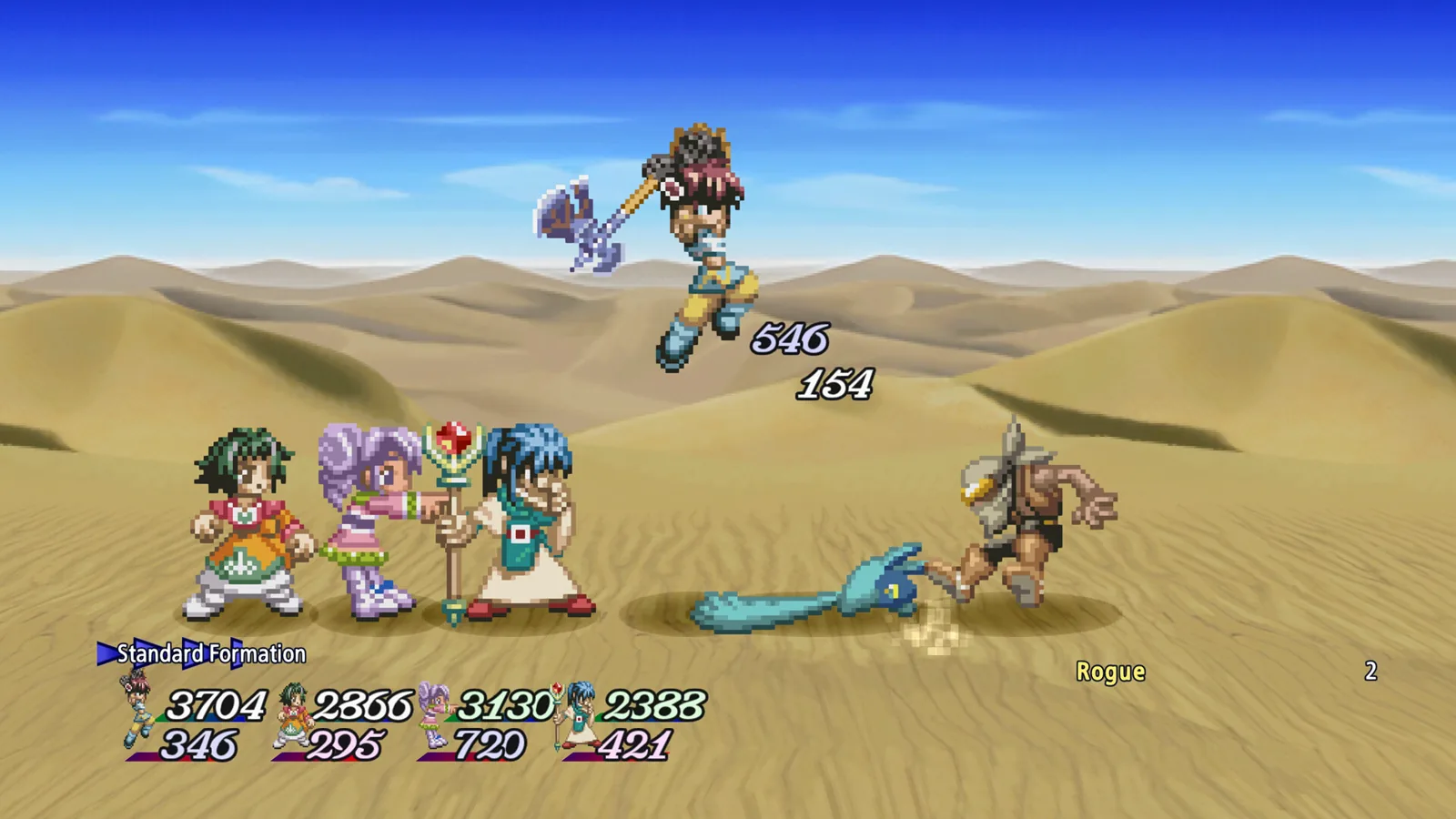
The store copy is short and worth quoting: the game runs on the "Aggressive Linear Motion Battle System (A-LMBS), which enables diverse Arte usage, continued combos, and coordination with each unique party member," promising "fast-paced, dynamic 2D battle action" (Steam store page). Translated into what your thumbs do — you move along a flat plane, and damage comes from stringing artes rather than picking a command and waiting.
According to talesofeterniaremastered.wiki, up to four characters are active at once, and friend and foe keep repositioning while elemental magic is still in the air. The break from older 2D Tales games, that page argues, is that a high-tier spell or a spirit summon does not freeze the screen. The fight keeps ticking, so a two-second cast is two seconds you could spend walking into a counter.
The same page says AI partners follow preset tactical behaviour: how much TP they burn, which enemy they prioritise, when they heal. When a fight collapses out of nowhere, that behaviour set is usually the reason.
| A-LMBS element | What it means for you |
|---|---|
| Battlefield | Flat 2D plane, up to four active party members (community report) |
| Time | No freeze during spells or summons; the field keeps moving |
| Damage source | Cancelled Arte chains, not single swings |
| AI allies | Preset behaviour sets TP use, target order, healing |
| Pacing | High-speed auto-battle available in the remaster |
Semi-Auto, Manual, and the Book of Manual
You start on Semi-Auto. The same talesofeterniaremastered.wiki guide describes it as: you ask for an attack, the character runs to the target, swings, then drifts back to a default distance. Forgiving while you learn timing, awkward the moment you want to hop a projectile.
Manual is gated behind a short sequence rather than a settings toggle, and that page lays it out in order:
- Leave the starting village of Rasheans.
- Train at Regles Dojo.
- Take the Book of Manual.
- Open the party menu and switch that character from Semi-Auto to Manual.
Manual gives you walking, running, jumping and input buffering with no automatic repositioning. Blocking exists here too — the original game added manual blocking alongside the Craymel Cage System, as a PS5 review dated October 14, 2026 notes.
| Behaviour | Semi-Auto | Manual |
|---|---|---|
| Closing distance | Automatic | You steer it |
| Spacing after a swing | Snaps back to default | Stays where you land |
| Jumping | Limited | Full control |
| Input buffering | Limited | Available |
| How you get it | Default from the start | Book of Manual at Regles Dojo |
Once you can steer, artes get slotted by job rather than by damage number. The same guide suggests putting straight projectiles on neutral, with Demon Fang (Majinken) as the usual pick. Anti-air strikes such as Swallow Dance or Tiger Fang (Kogahazan) go on up. Forward inputs take rushing moves like Sonic Thrust, and down is reserved for recovery commands, so a bad exchange has somewhere to go.
Chain Order, Proficiency, and Usage Counts
The community guide lays out a strict sequence, and skipping a link is why combos drop:
| Stage | What you input | Examples |
|---|---|---|
| Basic attacks | Two to three weapon or martial blows | Sword swings, punches |
| Base Arte | Cancel the final basic strike's recovery | Majinken, Raijinken |
| Arcane Arte | Cancel the Base Arte | Kogarenzan, Akisazame |
The same page warns that multi-hit techniques like Chirisazame root you in place while they play out. Cancelling those early recovery frames into an Arcane Arte is the difference between a clean string and eating a counter.
Growth runs on three inputs: character level, proficiency stats, and raw usage count. That guide notes Reid's sword skills key off his Slash and Thrust ratings, while Farah's martial arts key off Foot and Hand. Usage thresholds on parent artes gate the combination techniques (Ougi) such as Majinrengazan and Majinsenretsuha, and stacking counts also lifts damage and hit reliability over time — so grinding a weak arte is not wasted time.
Craymel Cages: Fringing, Vitality, and Summons
Mages do not learn spells by levelling alone. The same page says progression lives in the two Craymel Cages carried by Keele and Meredy, and the Fringe command inside that menu merges the elemental knowledge of the spirits you currently hold into new magic. If a mage suddenly stops learning anything, the cage is the first place to look.
| Cage rule | Detail |
|---|---|
| Cages available | Two, carried by Keele and Meredy |
| Unlocking spells | Fringe command in the Craymel Cage menu |
| Heal requirements | Undine (Water) and Sylph (Wind) in the caster's gauge, plus spirit level thresholds |
| Summon trigger | Gauge reads "Vitality Max!" |
| After a summon | That Craymel's Vitality drops to zero |
| Moving a spirit | The Vitality gauge it built is lost |
| Summon damage | Fixed elemental base values plus enemy weakness, not weapon stats |
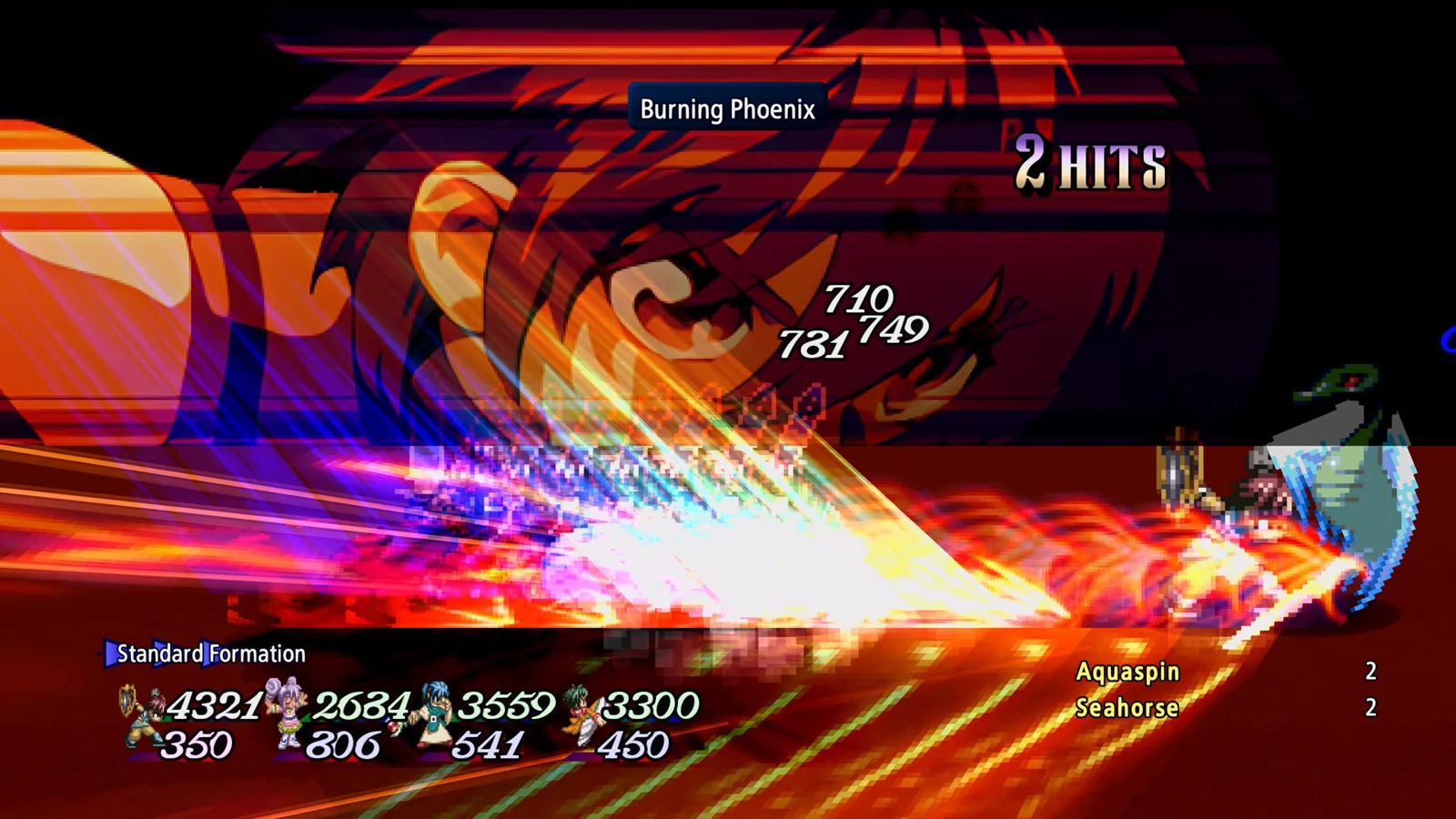
Vitality is a yellow gauge that fills from matching elemental casting. The same guide says wind magic raises Sylph's gauge while draining Gnome's earth gauge, so your spell rotation quietly decides which summon you can fire. Summon damage ignores your weapon line entirely — the community example is Undine into fire-aligned foes such as Efreet — which makes weakness targeting worth more than a stronger sword.
Plan cage swaps before a dungeon, not inside it, because shifting a Craymel to another character wipes the gauge it earned. Spells also carry hidden extensions: the same page notes Spread can grow into the wider water cyclone Maelstrom once the prerequisites are met.
Greater Craymels, Melnics, and Story Guides
Greater Craymels Guide
The standalone spirit questions come down to cage logistics: two cages, one on Keele and one on Meredy; Fringe inside the cage menu to unlock magic; Heal needs Undine and Sylph in the caster's gauge plus spirit levels; and a summon only fires at "Vitality Max!" and drains that gauge to zero. talesofeterniaremastered.wiki also lists a separate Greater Craymels guide, but those are the rules that change a fight.
Melnics Guide and Generator
The same site's related-guide list advertises a Melnics helper covering cipher rules, translation tips for Meredy's dialogue, and a web generator it calls official. No official Steam page describes the cipher or a generator, so treat that as community tooling for reading Meredy's lines, not a combat system. If you only care about fights, nothing here changes your arte chain.
Story and Lore Guide
The official premise is short: Eternia is split into Inferia and Celestia, Reid and Farah meet Meredy in Rasheans, and the "Great Fall" threatens both worlds. The party's tool against that is the Greater Craymels. A PS5 review dated October 14, 2026 notes the remaster brings a new English localization and script, with skits restored. That context matters only because it explains why the cage system carries the magic plot.
Remaster Toggles, Auto-Battle, and the Knockdown Trick
Quality-of-life switches are the part of a Tales of Eternia Remastered combat guide that decides whether a fight is fair. The store page lists "destination markers, the ability to disable enemy encounters, and high-speed mode during auto-battle," plus graphics and SFX you can toggle between modes. Random encounters can be switched off with an on-screen icon; scripted trap ambushes and story bosses cannot.
| Toggle | Effect | Watch out for |
|---|---|---|
| Encounter disable | Turns off random battles | Scripted traps and bosses still trigger |
| High-speed auto-battle | Speeds up grinding while on Auto | You are not steering |
| Damage multiplier | 4x damage dealt and taken | Enemies get the 4x too |
| EXP and money boost | 4x gain, per the same news item | Trivialises levelling |
| Quest markers | Destination pointers | No combat effect |
That damage multiplier is the trap. A Russian-language Steam news post dated October 16, 2026 warns it applies to opponents as well, so ordinary bosses can flatten the party in a single hit (Steam news). The same post reports 4x experience and money and quest markers, and notes the port is built on the PSP release rather than the PS1 original — which is why battles lost local multiplayer. talesofeterniaremastered.wiki instead counts 13 system-menu toggles, including double experience and a zero-experience option for low-level runs, so check your own menu rather than trusting a fixed number.
Two smaller notes from the same launch-day news: the Deluxe Edition adds a Battle BGM pack that swaps battle music for tracks from earlier series entries, and on October 18, 2026 the Steam listing showed $29.99 standard and $49.99 Deluxe.
Last one, and it is pure player experience: one tip on talesofeterniaremastered.wiki says that if a front-liner gets knocked flat, opening the pause menu and using an item overrides the knockdown animation, and the character stands up immediately. Cheap, but it works.
Next steps
FAQ
What is A-LMBS in Tales of Eternia Remastered?
It is the real-time 2D battle system, described officially as enabling "diverse Arte usage, continued combos, and coordination with each unique party member." Spells and summons resolve without pausing the field, so movement never stops.
How do I get Manual control?
Leave Rasheans, train at Regles Dojo, pick up the Book of Manual, then set your character from Semi-Auto to Manual in the party menu. Until then, every attack auto-approaches and resets your spacing.
Why did my mage stop learning spells?
The cage is missing a spirit. New magic comes from the Fringe command in the Craymel Cage menu, and specific spells need specific combinations — Heal, for instance, wants Undine and Sylph in the caster's gauge plus the right spirit levels. Shifting a Craymel between characters also wipes its Vitality, so rebuild before a boss.
How do summons hit harder?
They scale on fixed elemental base values and the target's weakness rather than the caster's weapon, so pairing the right spirit with the right enemy matters more than gear. Fill a gauge to "Vitality Max!", fire the summon, then expect that Craymel to sit at zero Vitality afterwards.
Related Articles
Continue Reading
4x EXP Boost: How It Works
Tales of Eternia Remastered 4x exp explained: how to toggle the boost, what 1x, 2x and 4x really do, the 5x damage trap, and where the menu options sit.
5x Damage: How the Boost Works
Tales of Eternia Remastered 5x damage explained: the full boost table from 1x to 5x, why incoming hits hurt too, and how battle retry softens boss fights.
Achievements: What We Know
No achievement or trophy list is public as of 2026-10-15. Here's what the remaster's platforms, modes and completion-relevant features tell us to expect.
Auto Battle: Speed and Boosts
Tales of Eternia Remastered auto battle explained: how to turn on Auto, the high-speed toggle, and the EXP and Gald boost numbers you can set in the menu.
Language and Audio Guide
Which voice and subtitle languages Tales of Eternia Remastered lists, plus notes on importing Japanese and European physical copies.
Graphics Comparison Guide
See how Tales of Eternia Remastered graphics comparison works: Remastered vs Original modes, 60 FPS targets, plus platform specs for each console and PC.